

I want to tell you about a mistake I made early in my career.
It’s a mistake I’ve watched almost every creative entrepreneur make. Filmmakers, designers, developers, photographers, music producers etc. If you get paid for a skill, this is for you.
My background is in film, but these concepts carry across every creative industry. Cosmetologists, architects, tattoo artists, and many others.
The craft changes, but the pattern stays the same.
We buy our way into a business before we’ve built one. We call it investing in ourselves, in our craft or in our brand, but most of the time it’s something else entirely.
Note: Some tools are very much needed. The mistake isn't buying equipment, it's buying before the business demands it.
What gear trapped actually is
It’s the belief that the next purchase is the thing standing between you and the version of your business you’re trying to build.
For example, you may say to yourself…
You can’t raise your rates until you own the better camera.
You can’t launch until the app is perfect.
You can’t take on bigger clients until your studio looks like the ones you see on Instagram.
The purchase feels like momentum. It feels like progress. It has the same emotional satisfaction as doing actual work without requiring you to do any of the hard parts.
That’s what makes it so dangerous because here’s the truth nobody tells you when you’re starting out:
The business you build in the beginning is not the business you’ll run five years from now.
Your first job isn’t building the perfect business. Your first job is figuring out what actually works.
Why the problem follows you into success
Most people assume it’s a beginner problem and when you get experience or make more money you grow out of it. You don’t.
I’ve watched creatives earning great money $200k+ a year, fall into the exact same trap. The purchases just get more expensive. The $500 lens becomes a $5,000 lens. The home office becomes a studio lease. The freelance setup becomes a full production infrastructure built for a business that doesn’t exist yet.
I am relating this to my industry, but you get my point.
Instead of saving or investing the money they worked incredibly hard to earn, they’re immediately scanning for the next thing to spend it on.
The income scales while the habit stays the same. Every dollar you spend has an alternative use. Economists call this opportunity cost. Most creative entrepreneurs never apply it to their purchasing decisions.
Ownership isn’t just owning gear. What I do differently now.
I still buy gear, but the difference is the filter I run every purchase through. I ask myself “does this solve a real business problem?”
Most creatives think ownership means owning more stuff or having a paper that says LLC. Real ownership is a mental shift to thinking about financial growth goals, having cash reserves, increasing workflow speed, building a healthy network, systems that scale and having assets that appreciate.
Gear is an asset, but it depreciates the moment you buy it. The assets above compound. They work for you on the days you don’t work.
The goal isn’t to own every piece of equipment in your industry. The goal is to build a life where ALL assets work together.
Remember, before your next purchase — ask yourself one question
Is this the highest return use of this dollar right now? Make the decision intentionally, because every dollar you spend today is a dollar that can’t be spent somewhere else tomorrow.
We have two unique examples if you continue reading! Otherwise please share with another creative entrepreneur if you thought this reading was helpful!
Example 1: Let me make it concrete.
Say you’re considering a $10,000 camera upgrade. Your current camera already satisfies the majority of your clients.
Here’s what that same $10,000 could become instead:
Six months of financial runway, the ability to say no to clients you don’t want (download our runway calculator)
A marketing investment: reaching the clients you actually do want. (Spec Ad or partnerships to develop an original concept or campaign without having to ask for money)
A part-time editor or assistant (buying back your time so you can grow your business)
An emergency fund: protection against the inevitable slow season
A simple index fund investment: money that compounds while you sleep
The question most creatives ask is: can I afford it?
The question that actually builds your business while building your finances is: is this the highest-return use of this dollar right now?
Example 2: The car wash lesson
I want you to think about car washes for a moment. Ten years ago a car wash was four bays, a coin slot, and a pressure hose.

That was the product. You showed up, you paid, you washed your car.
Now look at what they’ve become.
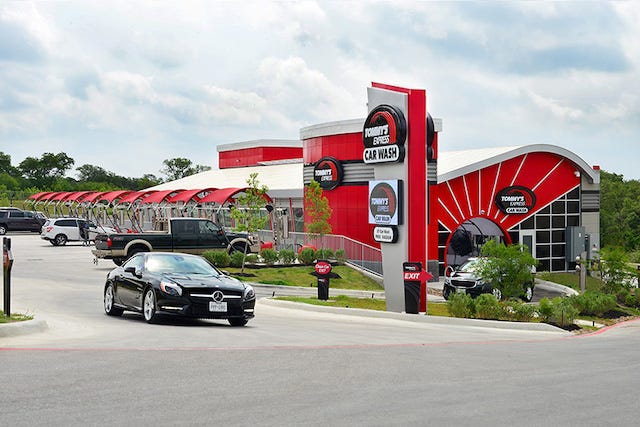
Monthly subscriptions, loyalty programs, tire shine, dashboard spray, air fresheners, and towels. It’s a full experience built around something as simple as cleaning a vehicle.
Did the owner of that car wash know on day one that subscriptions would be their model? No. They figured it out by running the business, watching what customers responded to, and building toward what was actually working.
The service stayed the same. The business model evolved completely.
Here’s the lesson:
Too many creative entrepreneurs buy for the business they hope to have instead of the business they actually have.
Imagine you own that car wash early on. Your first instinct is to buy a second pressure washer. Then a third. Soon you’ve spent tens of thousands improving a business that only has enough customers to keep one machine busy.
The problem was never the equipment. The problem was demand. What if instead you’d spent that money on marketing, on systems, on freeing up your own time to grow the customer base?
The business grows. Eventually the second pressure washer becomes necessary — not because you wanted it, but because the business demanded it. Buy because the business demands it. Not because you want it.